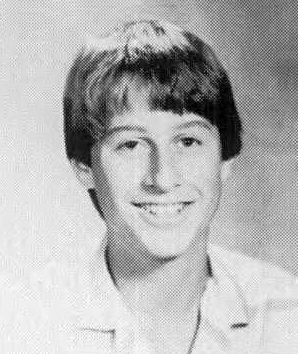
Brandon Burlsworth joined the University of Arkansas football team as a walk-on in 1994 and developed into an All-American. The Indianapolis Colts selected him in the 1999 draft, but he died in a car crash eleven days later. Greater dramatizes his college years; his family’s foundation documents the community programs that carry his name.
Diane Borchardt recruited teenagers, including students she knew through school, to kill her husband Ruben in Wisconsin in 1994. The promised reward and the teenagers’ accounts helped reveal the plot. The case became the basis of the television drama Seduced by Madness.
Joe Metheny killed Catherine Magaziner and Kimberly Spicer in Baltimore, concealing their remains on the grounds of the pallet business where he worked. The investigation exposed violence against women living in vulnerable circumstances. His sensational claims about additional crimes attracted headlines, but those claims should not be confused with the murders established in court.
Ron Rudin disappeared in December 1994 and was found murdered. Margaret Rudin was convicted in 2001, but a federal court vacated that conviction in 2022. The murder charge was dismissed in 2024; older television accounts predate those developments.
Seven-year-old Megan Kanka was sexually assaulted and murdered by her neighbor Jesse Timmendequas in July 1994. Her parents’ campaign for community notification about convicted sex offenders led to state legislation and a federal law bearing her name.
Nicole Brown Simpson and Ron Goldman were stabbed to death in Los Angeles in 1994. O. J. Simpson was acquitted in the criminal trial and later found liable for their deaths in a civil case. Books and documentaries examine the evidence, the proceedings, and their different outcomes.
Susan Smith told police that a carjacker had driven away with her two sons, three-year-old Michael and one-year-old Alex. After nine days of televised appeals in 1994, she admitted letting her car roll into a South Carolina lake with the boys inside. Both children drowned. She was convicted of their murders.
Bobby Kent was lured to a secluded area in Florida and murdered in 1993 by a group of young people who knew him. Accounts of bullying and abuse within the group became central to the case. The investigation exposed how conversations about stopping Kent escalated into a coordinated plan to kill him.
Brandon Teena, Lisa Lambert, and Philip DeVine were killed in a Nebraska farmhouse in 1993. Brandon had reported a sexual assault by John Lotter and Tom Nissen before the murders. Both men were convicted in connection with the killings. The case drew attention to anti-transgender violence and the authorities’ treatment of Brandon’s assault report.
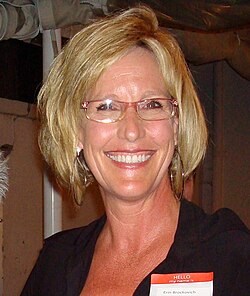
Residents of Hinkley challenged Pacific Gas and Electric over chromium contamination of groundwater. Erin Brockovich helped investigate residents’ accounts and assemble the legal case that resulted in a 1996 settlement. California regulators’ cleanup work is a separate, continuing part of this environmental history.
Gina Marie Nueslein, 22, was found shot to death in Gunpowder State Park in January 1993. Baltimore police sergeant James Allen Kulbicki, with whom she had a child, was convicted of her murder at a 1995 retrial. Later proceedings challenged the forensic evidence: in 2020, a Maryland appellate court directed that a writ of actual innocence be issued and the case returned for further proceedings.
Jennifer Ertman and Elizabeth Peña were attacked and murdered while taking a shortcut home in Houston in 1993. A group of gang members participated in the crimes. Their deaths led to multiple trials and years of reporting about the victims and the defendants’ sentences.
Lorena Bobbitt severed her husband John’s penis in Virginia in 1993 and described years of abuse during the ensuing proceedings. She was acquitted by reason of temporary insanity. The heavily sensationalized coverage later became the subject of documentaries examining domestic violence and media treatment.
A failed federal firearms raid on the Branch Davidian community near Waco in February 1993 began a 51-day standoff. It ended in fire during an FBI operation, with children and adults among the dead. Waco: American Apocalypse and official reviews examine negotiations, tactical decisions and the experiences of those caught inside.
Eddie Lee Sexton’s family fled Ohio for Florida while authorities were investigating abuse. In 1993, an infant in the family died, and Sexton later directed his son to kill Joel Good, the baby’s father. Prosecutors said the killing was intended to keep Good from revealing the family’s crimes and whereabouts.
The discovery of victims near Gilgo Beach exposed killings across Long Island and years of unanswered questions. Rex Heuermann pleaded guilty in April 2026 to seven murders and also admitted killing Karen Vergata. In June, he received life imprisonment without parole plus additional terms. The prosecution does not resolve every death associated with the wider investigation.
Damien EcholsPhoto creditLarry D. Moore · CC BY 4.0. Cropped/resized. Adaptations use the same license.
Stevie Branch, Michael Moore, and Christopher Byers were murdered in Arkansas in 1993. Three teenagers were convicted amid disputed evidence and allegations of satanic activity. In 2011 they entered Alford pleas and were released; that outcome was not an exoneration.
Seventeen-year-old Amy Fisher went to Mary Jo Buttafuoco’s Long Island home in 1992 and shot her in the head. Fisher had been involved with Mary Jo’s husband, Joey. Mary Jo survived, and the assault became an intensely covered tabloid story. Fisher pleaded guilty to attempted murder; the publicity often overshadowed the victim’s recovery.
Jennifer Asbenson escaped after being abducted and attacked by Andrew Urdiales in Southern California in 1992. Her account later helped identify him as the man who had held her. Memoir and screen treatments describe the escape and the difficulties she faced afterward.
Nine-year-old Katie Beers was abducted by family acquaintance John Esposito on Long Island in 1992. He imprisoned her in an underground space beneath his property while a search was underway. She was rescued after seventeen days. Her survival exposed the hidden confinement and the abuse and neglect she had already endured.
Laurie Kellogg was convicted of arranging the 1992 killing of her husband Bruce at a New York vacation property. Teenagers participated in the plot and shooting. Her account of an abusive marriage and the prosecution’s murder-for-hire case became the basis of Lies of the Heart.
Twelve-year-old Shanda Sharer was abducted, tortured, and killed by four teenage girls in Indiana in January 1992. Melinda Loveless directed the attack amid jealousy over a relationship. The girls set Shanda on fire after hours of abuse. All four were prosecuted, and the killing drew national attention to extreme violence among teenagers.
Attorney Jimmy Grund was shot in his home in August 1992. The investigation focused on his wife Susan and the circumstances inside the household before his death.
Dale and Glee Ewell and their daughter Tiffany were shot dead in their California home in 1992. Their surviving son, Dana, stood to inherit the family fortune. Investigators uncovered a murder plot involving Dana and a friend, and both were convicted. The apparent family tragedy became a case about a son arranging his relatives’ deaths for money.