Unforgotten Casebook — One case. Every angle. One place.

Unforgotten Casebook

Unforgotten Casebook

One case. Every angle. One place.

Explore books, movies, podcasts, news coverage, and court records—organized by true crime case and real-life story, together in one place.

Explore the case library
Read the booksWatch the adaptationsListen & investigateGo to the sources

THE CASE LIBRARY

Start with a story.

236 cases in the collection

25 of 236 cases

More media formats first · Book-only cases last in each section

U.S. cases, plus the Bernardo–Homolka case in Canada.

Multiple & serial murders

2 cases
CASE 080New York

1976–1977

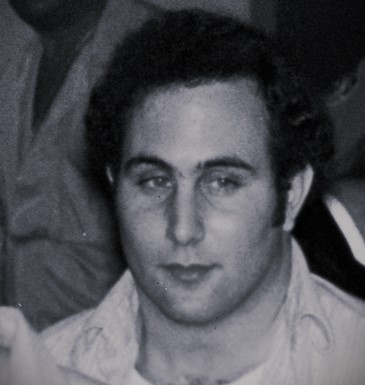
David Berkowitz · “Son of Sam

David Berkowitz killed six people and wounded others in shootings that frightened New York in 1976 and 1977. Letters using the name Son of Sam intensified the coverage. He pleaded guilty after his arrest; later media theories about accomplices go beyond those convictions.


CASE 088New York

1920s–1930s

Albert Fish

Albert Fish abducted Grace Budd after approaching her family in 1928. Years later, a letter describing her death helped investigators track him down. He was convicted of her murder; accounts of other killings include claims that were not all independently established.

Partners & family

4 cases
CASE 130New York

2005–2007

Stacey Castor

Stacey Castor poisoned her husband David with antifreeze and later tried to kill her daughter Ashley while framing her for the death. Ashley survived. Investigators challenged the supposed suicide accounts, and Castor’s prosecution became the subject of a Lifetime dramatization and crime reporting.

CASE 054New York, New York

1986

Jennifer Levin & Robert Chambers · “The Preppy Murder

Eighteen-year-old Jennifer Levin was found strangled in New York’s Central Park in 1986. Robert Chambers, who had left a bar with her, claimed she died during a sexual encounter. He later pleaded guilty to manslaughter. The “Preppy Murder” coverage became notorious for scrutiny of Jennifer’s private life and treatment of the victim.

Teen & school

2 cases
CASE 047Northport, New York

1984

Gary Lauwers & Ricky Kasso

Seventeen-year-old Gary Lauwers was killed in the woods in Northport, New York, in 1984. Ricky Kasso was arrested, and accounts connected the attack to a dispute within a drug-using teenage group. Reports of occult references fueled a national “Satanic panic.” Kasso died by suicide before his case could go to trial.

CASE 014Long Island, New York

1992

Amy Fisher & Mary Jo Buttafuoco

Seventeen-year-old Amy Fisher went to Mary Jo Buttafuoco’s Long Island home in 1992 and shot her in the head. Fisher had been involved with Mary Jo’s husband, Joey. Mary Jo survived, and the assault became an intensely covered tabloid story. Fisher pleaded guilty to attempted murder; the publicity often overshadowed the victim’s recovery.

Abduction & survival

1 cases
CASE 051Long Island, New York

1992–1993

Katie Beers

Nine-year-old Katie Beers was abducted by family acquaintance John Esposito on Long Island in 1992. He imprisoned her in an underground space beneath his property while a search was underway. She was rescued after seventeen days. Her survival exposed the hidden confinement and the abuse and neglect she had already endured.

Fame, money & betrayal

2 cases
CASE 024New York, New York

1998

Irene Silverman & the Kimes case

Wealthy New York homeowner Irene Silverman disappeared in 1998. Sante Kimes and her son Kenneth had targeted her property through an elaborate fraud scheme. They were convicted of her murder and related crimes even though her body had not been recovered. The investigation revealed plans to take control of her home using forged documents.

CASE 115New York, California & Texas

1982–2001

Robert Durst

Robert Durst became the focus of investigations involving his missing wife Kathie, his friend Susan Berman, and neighbor Morris Black. He was acquitted in Black’s death after claiming self-defense, but convicted of Berman’s murder in 2021. The Jinx brought renewed attention to the overlapping cases.

Disputed justice

1 cases
CASE 123New York

1989

The Central Park Five

Yusef Salaam
Yusef Salaam
Photo creditMetropolitan Transportation Authority · CC BY 4.0. Cropped/resized. Adaptations use the same license.

Five teenagers were wrongly convicted after the 1989 assault of jogger Trisha Meili in Central Park. Their convictions were vacated in 2002 after another man confessed and DNA supported his account. Documentary and dramatic treatments examine the interrogations, racialized coverage, and consequences for the five.

Public health & patient rights

1 cases
CASE 211New York City, New York, and Washington, D.C.

1987–1996

ACT UP & the AIDS treatment activists

People confronting AIDS organized protests, studied medical research and challenged government agencies over access to treatment. ACT UP and the Treatment Action Group helped reshape relationships between patients, researchers and regulators. How to Survive a Plague follows activists through illness, disagreement, loss and scientific progress.

Civil rights & equality

4 cases
CASE 200New York; Denver, Colorado; Washington, D.C.

1971–1993

Ruth Bader Ginsburg & the fight against sex discrimination

Ruth Bader Ginsburg challenged laws that treated people differently because of sex, developing a litigation strategy before her Supreme Court appointment. On the Basis of Sex dramatizes an early tax case involving a male caregiver; her collected writings offer a wider view of her legal career.

CASE 234Durham, North Carolina; Baltimore, Maryland; Washington, D.C.; New York

1940–1977

Pauli Murray

Lawyer, writer and activist Pauli Murray challenged racial and sex discrimination and developed legal arguments that influenced other civil rights advocates. Murray’s life also crossed boundaries of gender, faith and professional access. The memoir and documentary restore context to a figure often left out of familiar accounts.

Disability & access

1 cases
CASE 214New York and San Francisco, California

1970–1990

Judy Heumann & the disability-rights movement

Judy Heumann challenged exclusion from education and employment and helped organize the 1977 Section 504 sit-in. Her memoir and Crip Camp connect personal experience to collective action for accessibility and civil rights. The story includes the community that formed around a summer camp for disabled young people.

Journalism, whistleblowers & accountability

3 cases

Financial crises & corporate fraud

1 cases

Disasters & public safety

1 cases

Sports & cultural barriers

2 cases

BEYOND THE HEADLINE

A good story invites curiosity.
A good source gives it direction.

How we approach true stories