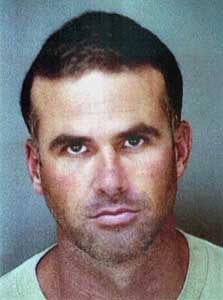
Tina Louise Foster, 20, disappeared in Roanoke in January 2001 after meeting a man who offered to photograph her for modeling. She was later found dead in her car. Christopher Haynes pleaded guilty to her murder in January 2002 and was sentenced to life imprisonment that March. Contemporary local television reports preserve the investigation and sentencing coverage; the 2026 Hooters documentary revisits her story alongside four other cases.
Anthony Robles, who was born without his right leg, began wrestling in high school and became an Arizona state champion. At Arizona State University he went on to win the 2011 NCAA wrestling championship. His memoir Unstoppable and its film adaptation follow his athletic development and the family pressures surrounding it.
Borys Kiejliches disappeared in 2000, and his remains were recovered in Queens. Investigators shifted their attention from an initial organized-crime theory to his wife Elena and her relationship with another man.
Joseph “Joe” Andriano was living with a serious cancer diagnosis when he was killed in the family’s Ahwatukee apartment in October 2000. The investigation examined poisoning evidence, emergency calls and Wendi Andriano’s account of the night. She claimed self-defense at trial; a jury convicted her of first-degree murder in 2004. The Arizona Supreme Court affirmed her conviction and death sentence in 2007. The linked opinion separates the evidence, defense arguments and appellate findings.
Greg de Villers was found dead in 2000, surrounded by rose petals. Toxicology findings prompted an investigation into fentanyl and the access his wife Kristin Rossum had through her work.
Sixteen-year-old Molly Bish disappeared from her Massachusetts lifeguard job in 2000. Her remains were discovered in 2003. The investigation has considered multiple leads, but the case remains unresolved; media discussion of suspects does not establish responsibility for her death.
Molly Bloom organized high-stakes poker games in Los Angeles and New York. She pleaded guilty to a gambling charge in 2013. Her memoir Molly’s Game became Aaron Sorkin’s film, offering a personal account and a dramatized interpretation of the events.
Sixteen-year-olds Ashley Freeman and Lauria Bible disappeared after a fire at the Freeman family’s Oklahoma home in 1999. Ashley’s parents, Danny and Kathy, had been killed, and the girls were missing from the scene. The investigation became a prolonged search for the teenagers alongside efforts to establish who carried out the killings.
Martha Gail Fulton was leaving her job at the Orion Township Public Library when she was killed in October 1999. Investigators traced the shooting to a plot involving Donna Trapani, who had been involved with Fulton’s husband, and people recruited from Florida. Separate juries convicted Trapani and Sybil Padgett of first-degree murder and conspiracy. Michigan’s Court of Appeals affirmed those convictions in 2003. The federal habeas decision provides another detailed record of Trapani’s unsuccessful challenge.
Retired television executive Steven Beard was shot in his Texas home in 1999 and later died from complications. Investigators uncovered a plot involving his wife, Celeste, and Tracey Tarlton, who fired the shot. Tarlton testified against Celeste, and the prosecution argued that the killing was arranged for financial gain.
Twelve students and teacher Dave Sanders were killed at Columbine High School in April 1999. The attack left survivors and families facing lasting trauma and generated a large public investigative record. Dave Cullen’s Columbine revisits the evidence and challenges several narratives that spread during the first days of coverage.
Carole Sund, her teenage daughter Juli, and family friend Silvina Pelosso disappeared during a Yosemite-area trip in 1999 and were found murdered. The later killing of park naturalist Joie Armstrong led investigators to Cary Stayner, a motel worker. Stayner was convicted in the killings that had frightened visitors and devastated four families.
Wealthy New York homeowner Irene Silverman disappeared in 1998. Sante Kimes and her son Kenneth had targeted her property through an elaborate fraud scheme. They were convicted of her murder and related crimes even though her body had not been recovered. The investigation revealed plans to take control of her home using forged documents.
Forty-nine-year-old James Byrd Jr. was murdered in Jasper, Texas, in June 1998 after three white men chained him to a pickup truck and dragged him along a road. The killing and subsequent trials exposed racial divisions and helped spur hate-crime reforms.
Stephen Hricko died during a Valentine's weekend hotel stay in 1998. Findings inconsistent with accidental smoke inhalation led investigators to examine poisoning, a room fire, and his wife Kimberly's actions.
Twenty-one-year-old Matthew Shepard was attacked near Laramie in October 1998 and died from his injuries. His killing became a focus of national debate about anti-gay violence. His family’s advocacy helped build support for a federal hate-crime law named for him and James Byrd Jr.
Attorney Robert Bilott began representing a West Virginia farmer in 1998 and uncovered records concerning PFOA contamination near DuPont’s Washington Works plant. The wider litigation and environmental enforcement brought scrutiny to drinking-water exposure and the reporting of chemical risks. His work is dramatized in Dark Waters.
Former Washington state trooper Ronda Reynolds was found shot in her home in 1998. Authorities initially treated her death as suicide, but her mother challenged that conclusion and pressed for further investigation. Conflicting evidence and later proceedings made the manner of death a prolonged public controversy rather than a straightforward, resolved murder case.
Alvin Ridley was prosecuted after his wife Virginia died at home. A Georgia jury acquitted him in 1999. His defense lawyer later wrote about the evidence and the consequences of treating unfamiliar behavior as guilt.
Dawn Hacheney died in a Washington house fire in 1997 that initially appeared accidental. Investigators later concluded that her husband, minister Nick Hacheney, had killed her and used the fire to conceal the crime. His affairs and claims of religious authority became part of the evidence leading to his murder conviction.
Twelve-year-old Jeremy Bell died during a trip with his elementary-school principal. His family’s search for answers and the later investigation exposed serious questions about school oversight and the handling of evidence.
An undercover investigation recorded politician Ruthann Aron's attempt to arrange the deaths of her husband and an attorney. After a hung jury, she entered a no-contest plea.
Sheila Bellush was murdered in her Florida home in 1997 while her young quadruplets were there. Her teenage daughter discovered the scene. Investigators traced the hired killing to Sheila’s former husband, Allen Blackthorne, and a chain of intermediaries. The prosecution showed that the attack was an arranged murder, not a random intrusion.
Tanya Hillerud, a Hooters employee, was shot and killed at her Port Richey home in 1997. Her boyfriend Vincent Rizzi was convicted of first-degree murder in 1999 and received a life sentence. Her story is one of five included in the 2026 documentary The Hooters Murders: Deadly Shift. The film connects separate cases through the women’s employment; it does not describe a single offender or coordinated series of crimes.